Medūza
![]()
Eglė Petrošiūtė ir Liudvika Sonia Koort
Sounds like a Silver Teaspoon
2024.03.08–04.06
On Friday, March 8, at 6 p.m., the Lithuanian Artists’ Association’s art space “Medūza” (Šv. Jono St. 11, Vilnius) will open Sounds Like a Silver Spoon, a joint exhibition by the young-generation artists Eglė Petrošiūtė and Liudvika Sonia Koort. The exhibition, whose title comes from a poetic text written by both artists, functions as an open dialogue about the psychology of space and the idea that the spaces we shape eventually begin to shape us.
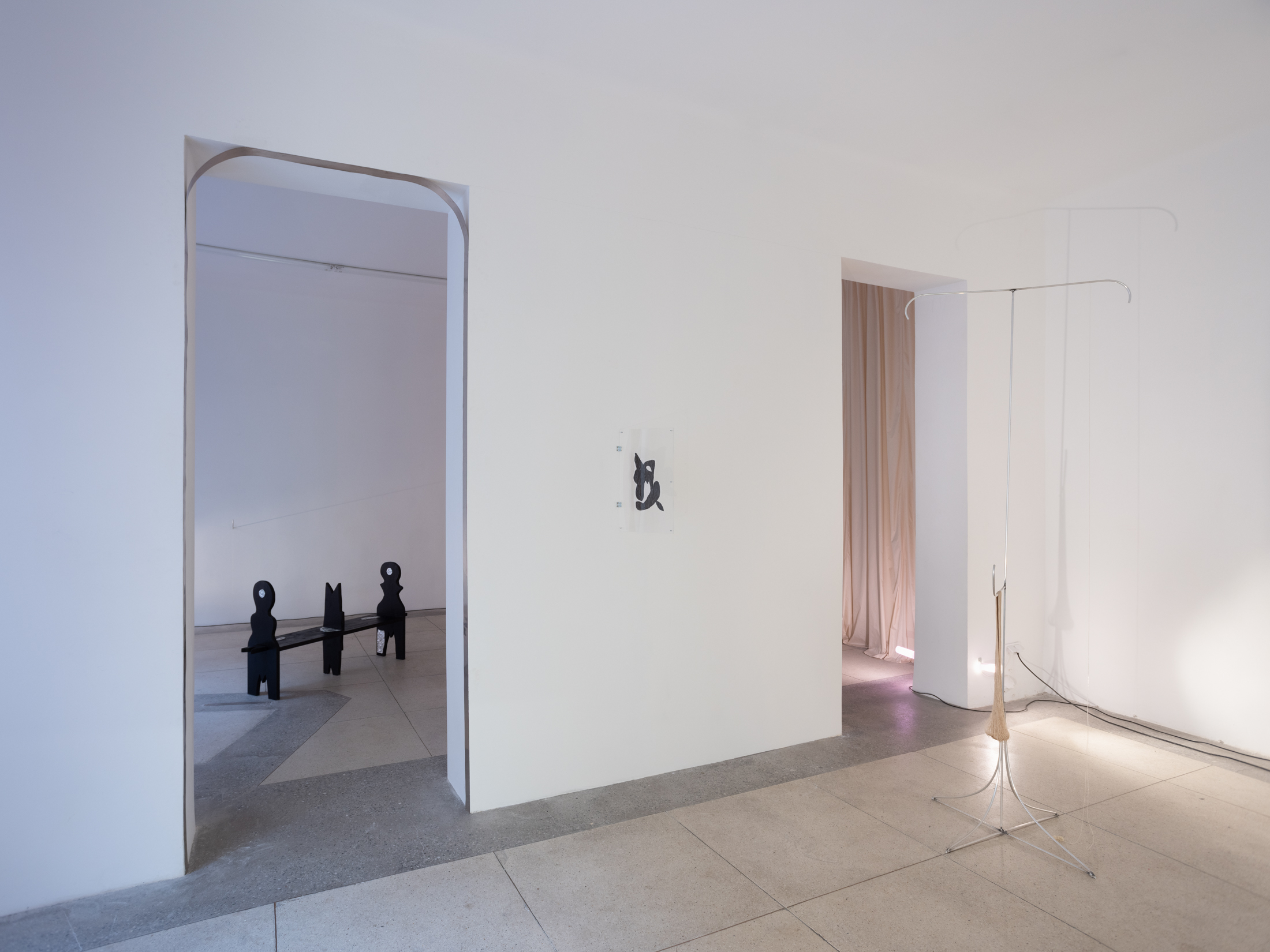
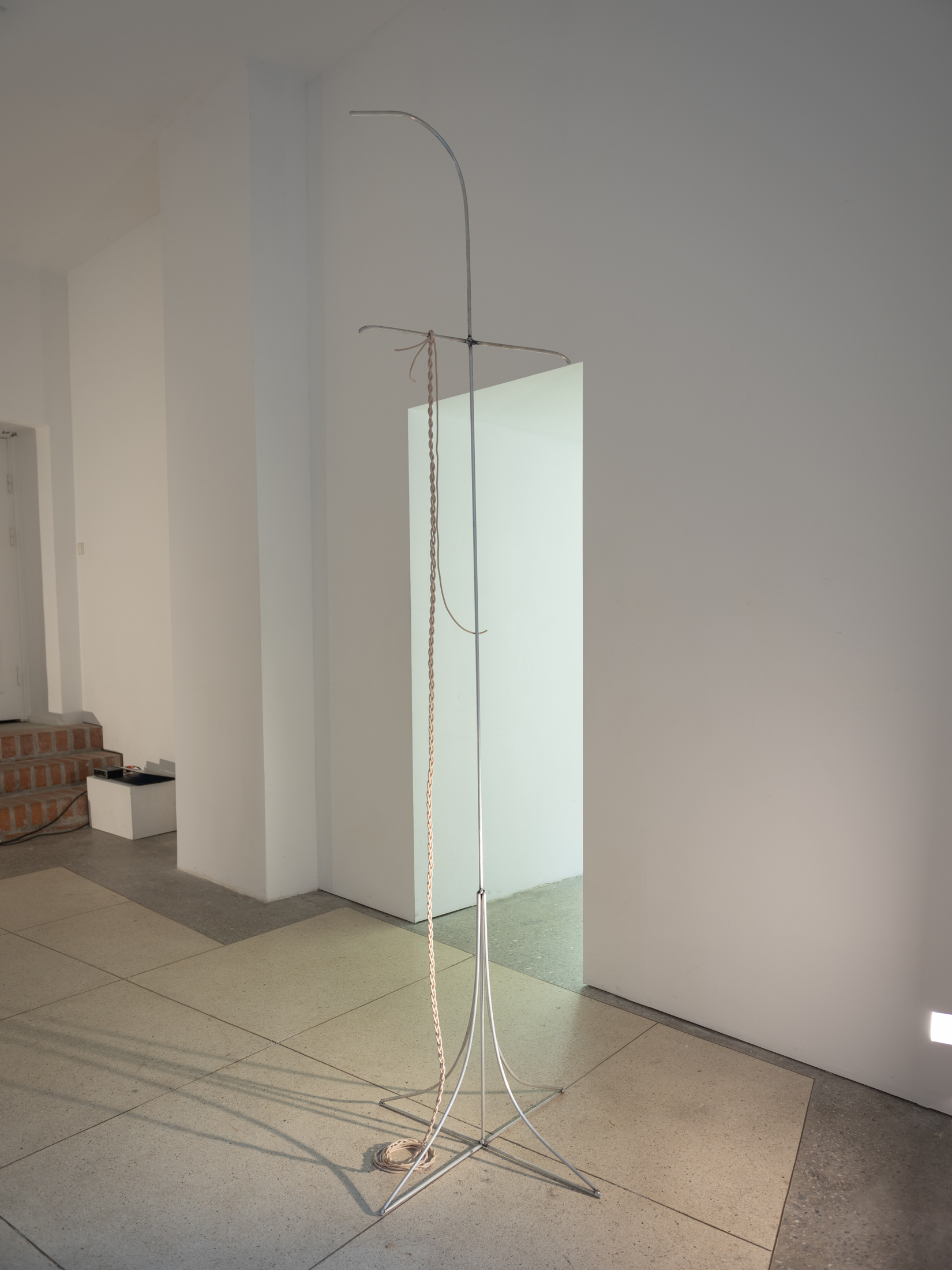
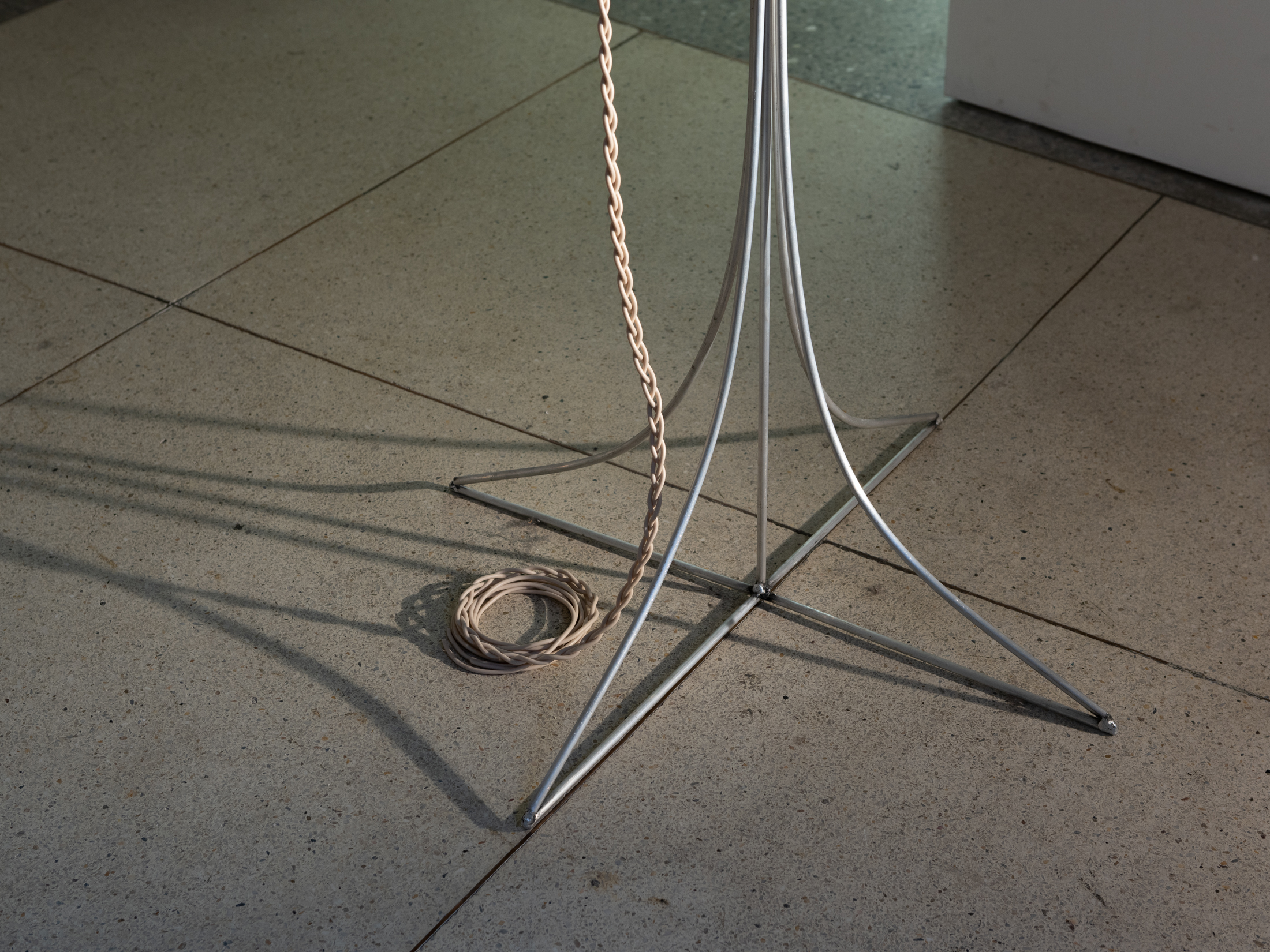
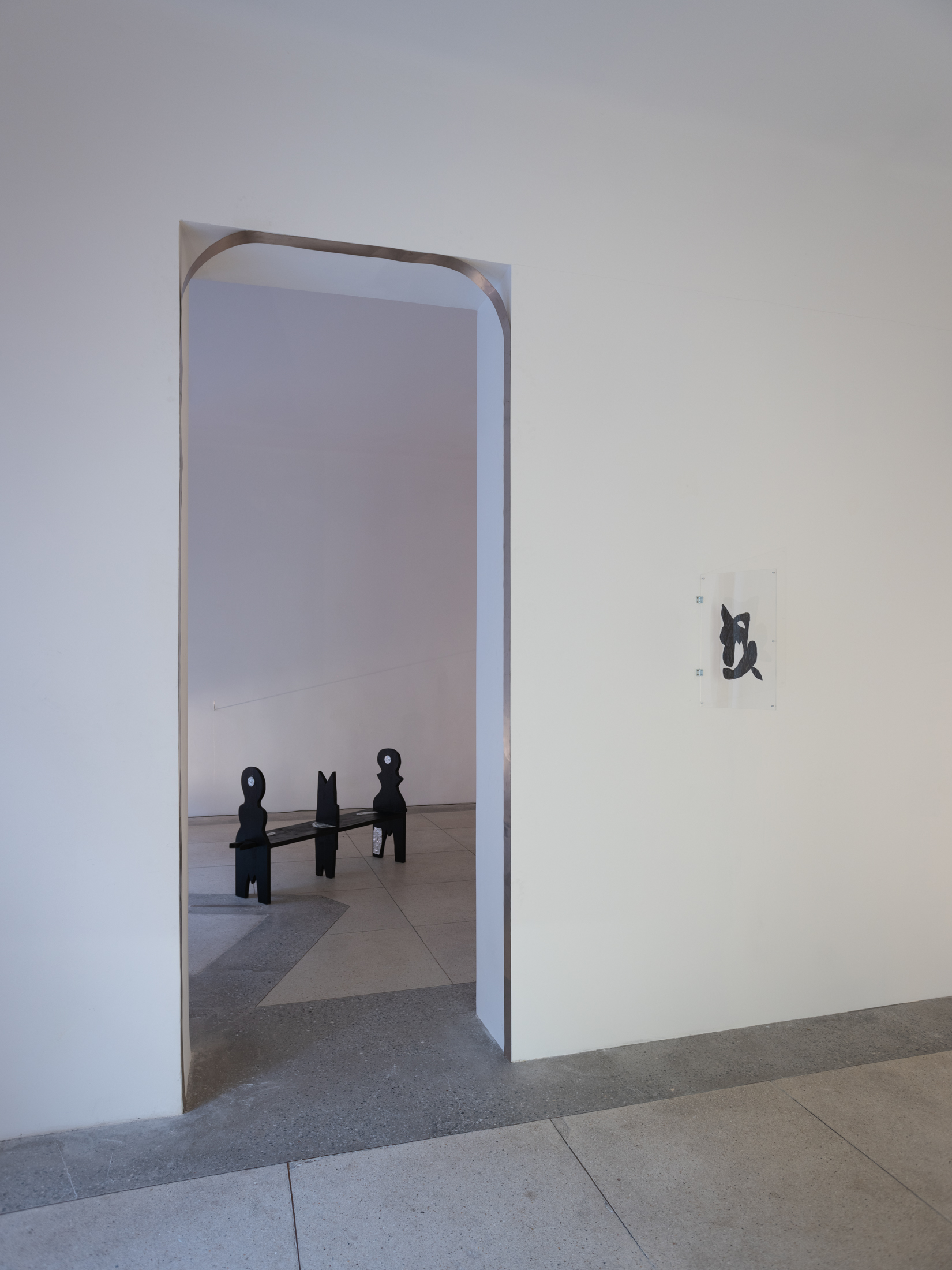
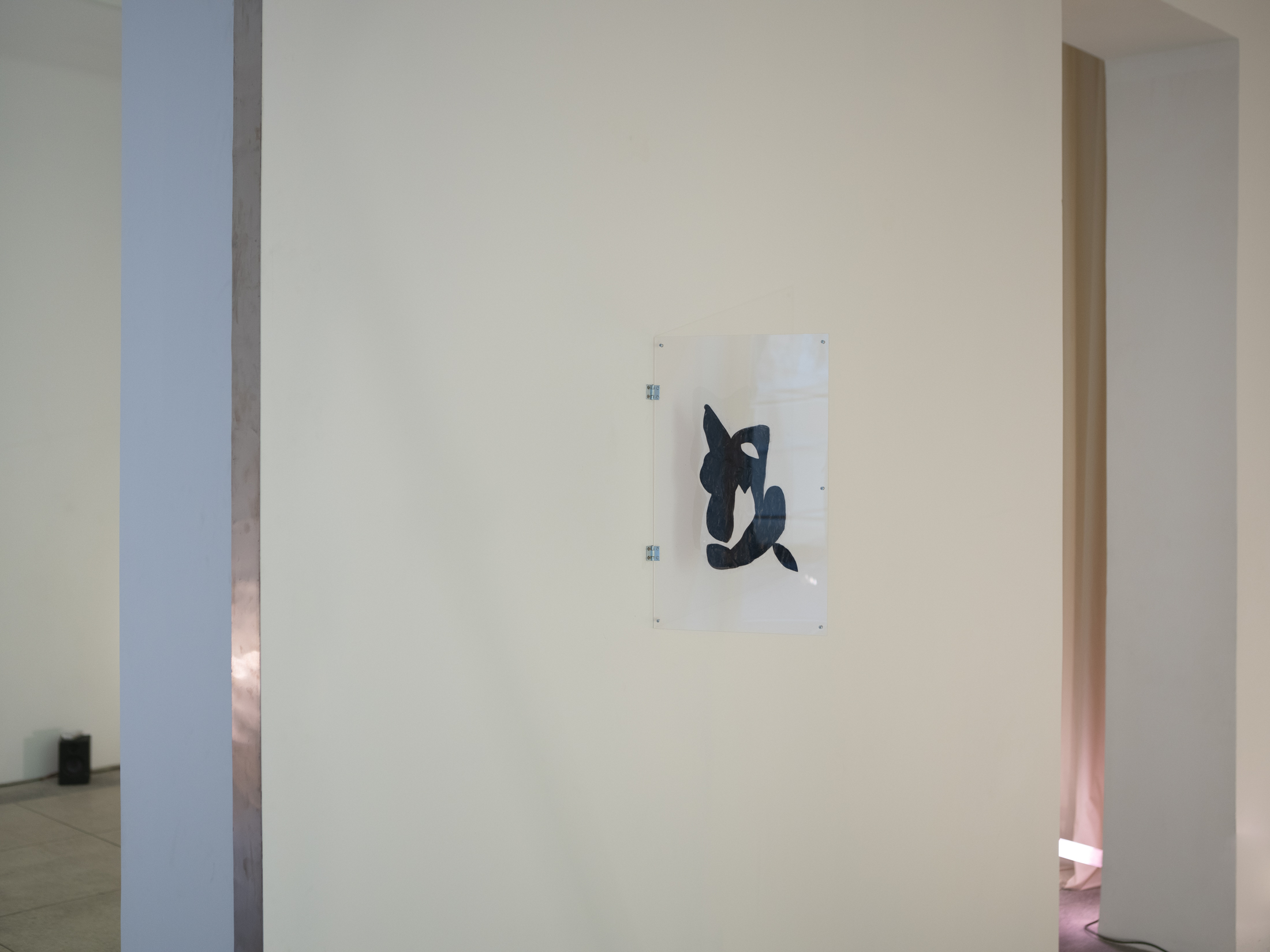
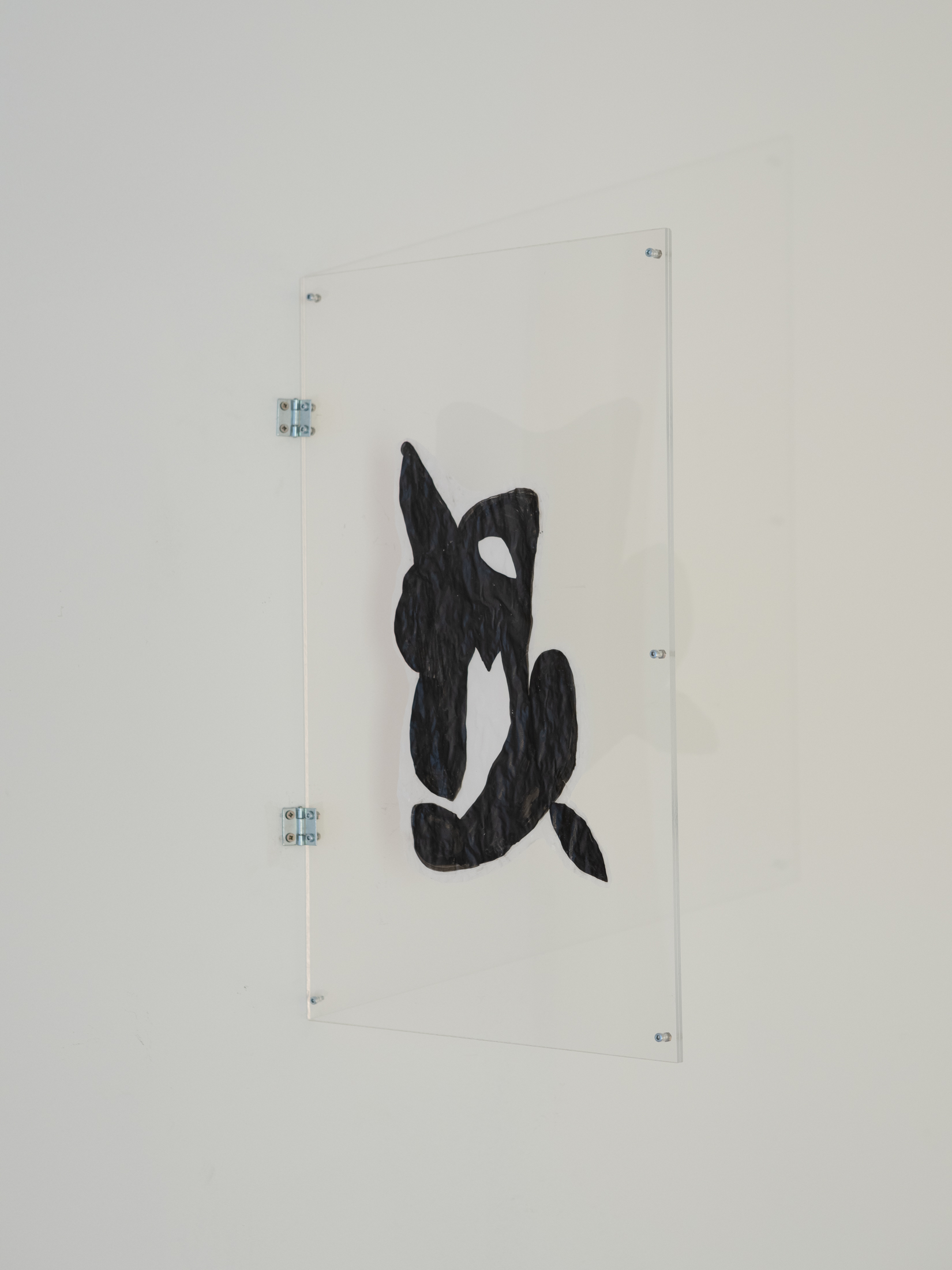
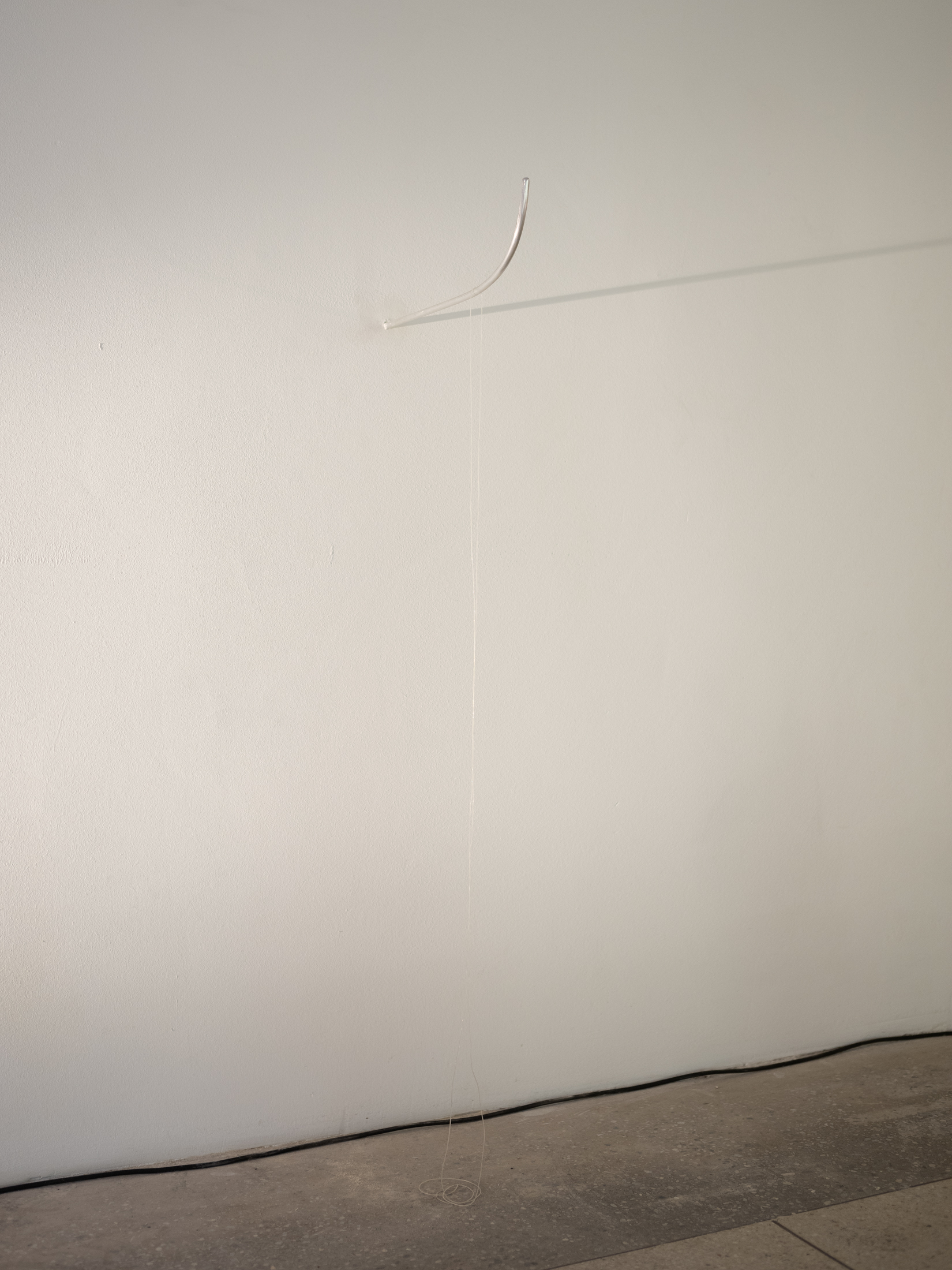
According to the exhibition’s curator, Eglė Agnė Benkunskytė, although Petrošiūtė and Koort work as individual creators, their meeting in Medūza’s main hall reveals shared threads in their artistic practices. “In this exhibition, the motif of the garden as a space for creating cosmologies becomes important,” the curator notes. “In Lithuanian mythology, the garden marks a liminal zone where the cycles of nature meet human cultural effort, and the artists explore this tension through sculpture, textiles, drawing, video art, sound, and installation elements.”
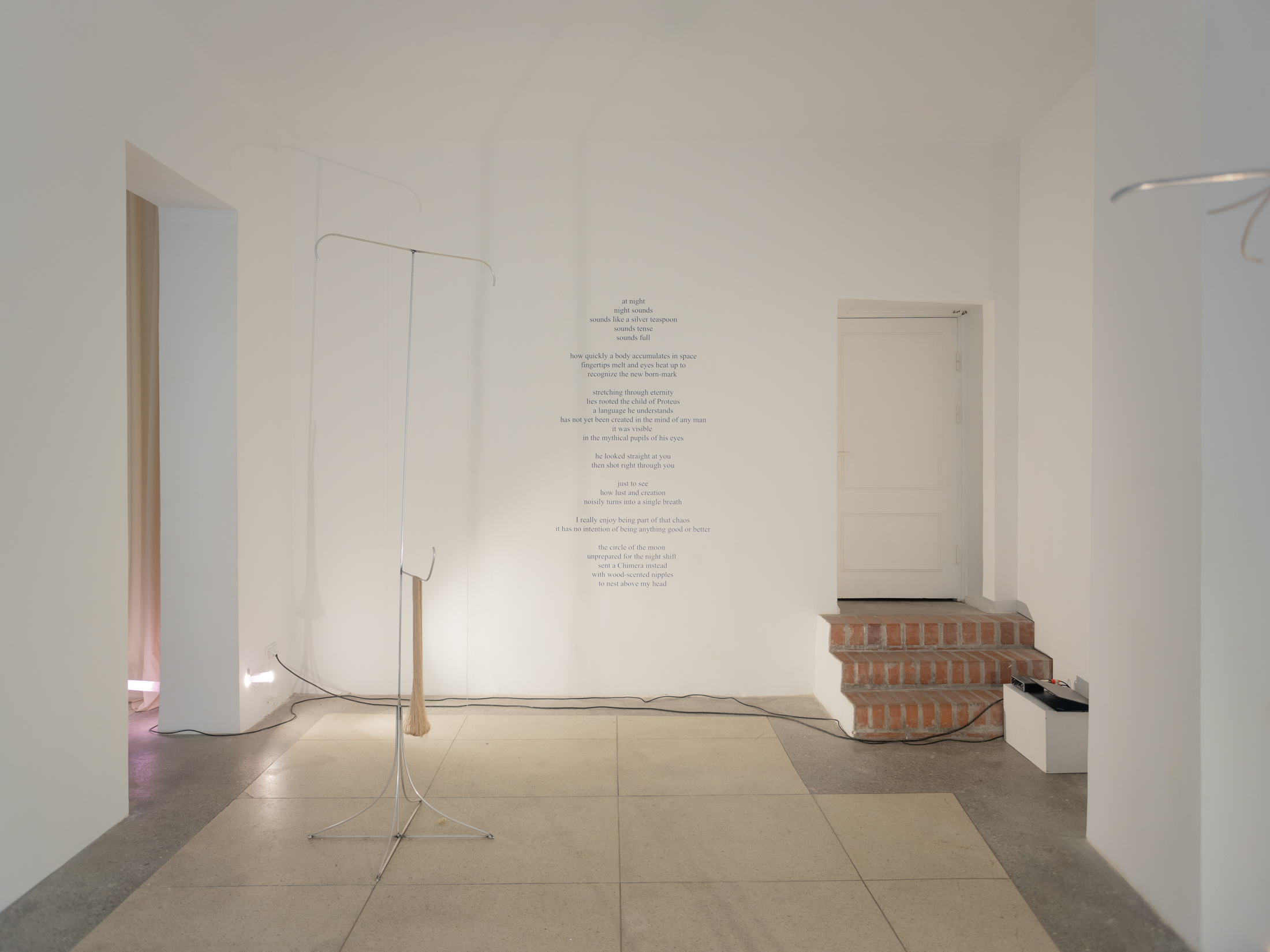
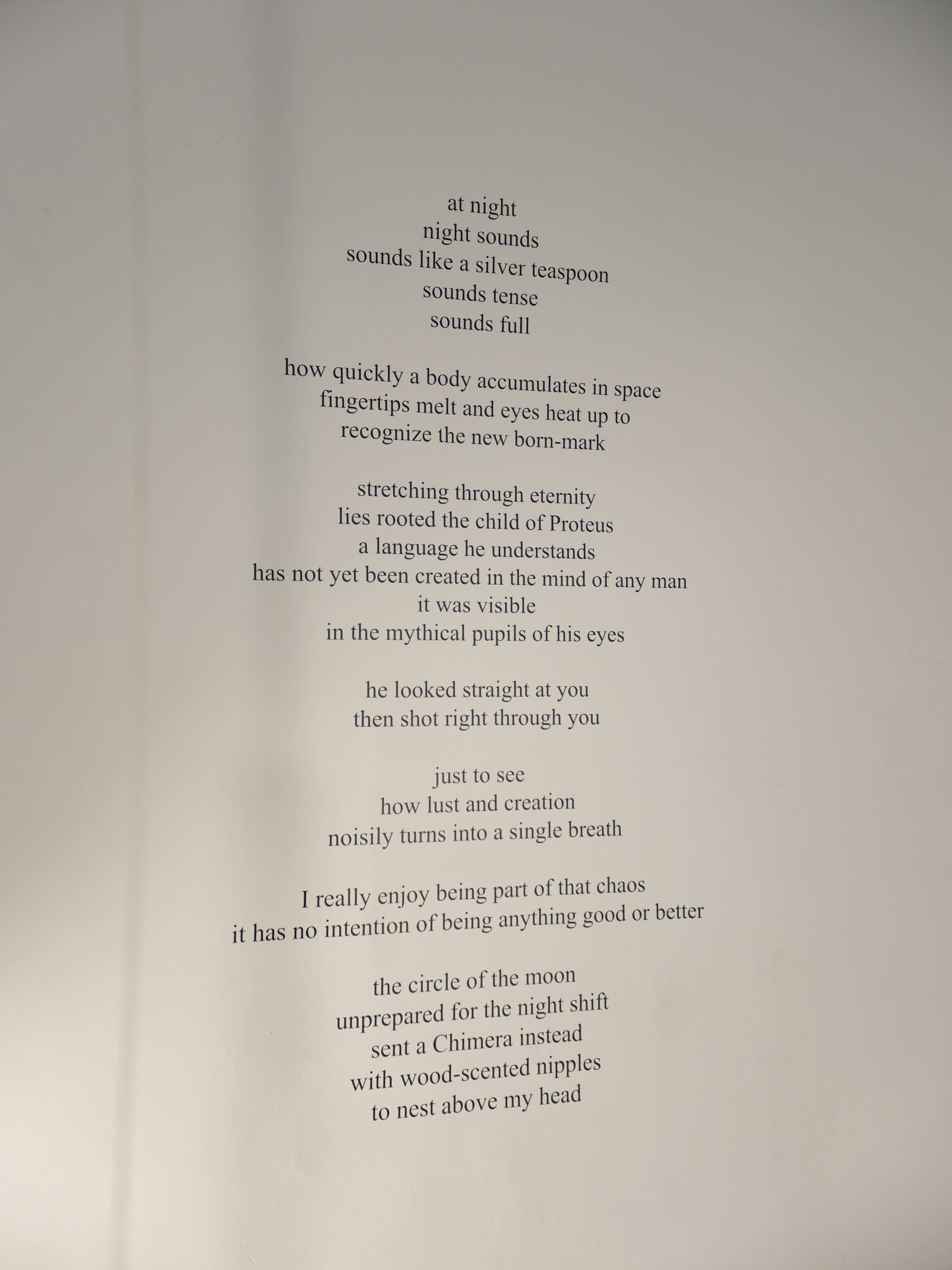
The central axis of the artists’ dialogue becomes the poetic text by Eglė Petrošiūtė and Liudvika Sonia Koort, which itself functions as a standalone work within the exhibition. Writing is a frequent part of both artists’ practices, so in marking their direct conversation, they decided to create a text composed of previously written lines. “We modified our earlier texts and combined them into a single whole that reflects our communication while preparing for the exhibition,” Koort explains. “There is naturally a lot of poetry and density of thought in the way we speak, so we read the different lines of the poem almost like letters to one another.”
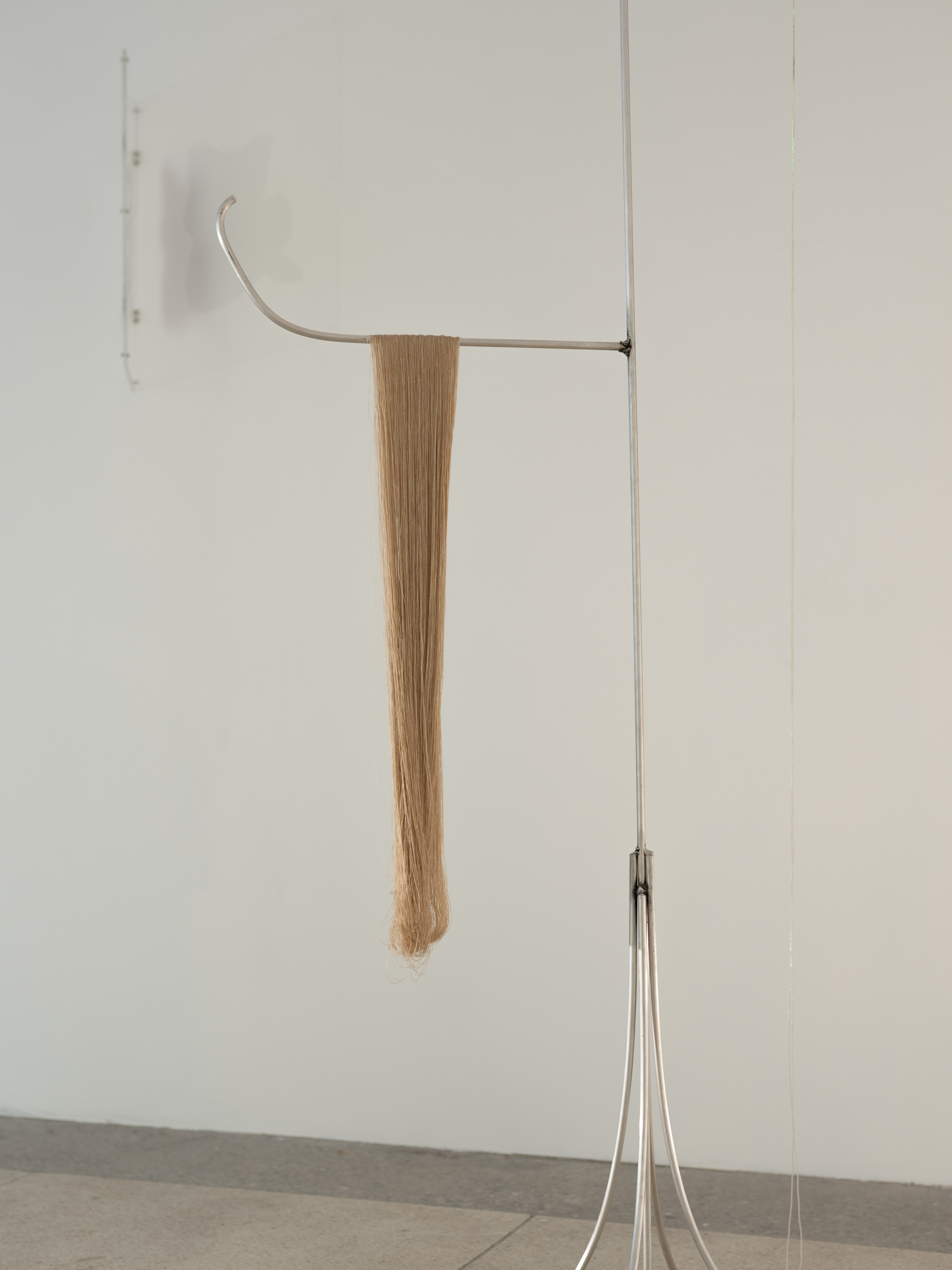
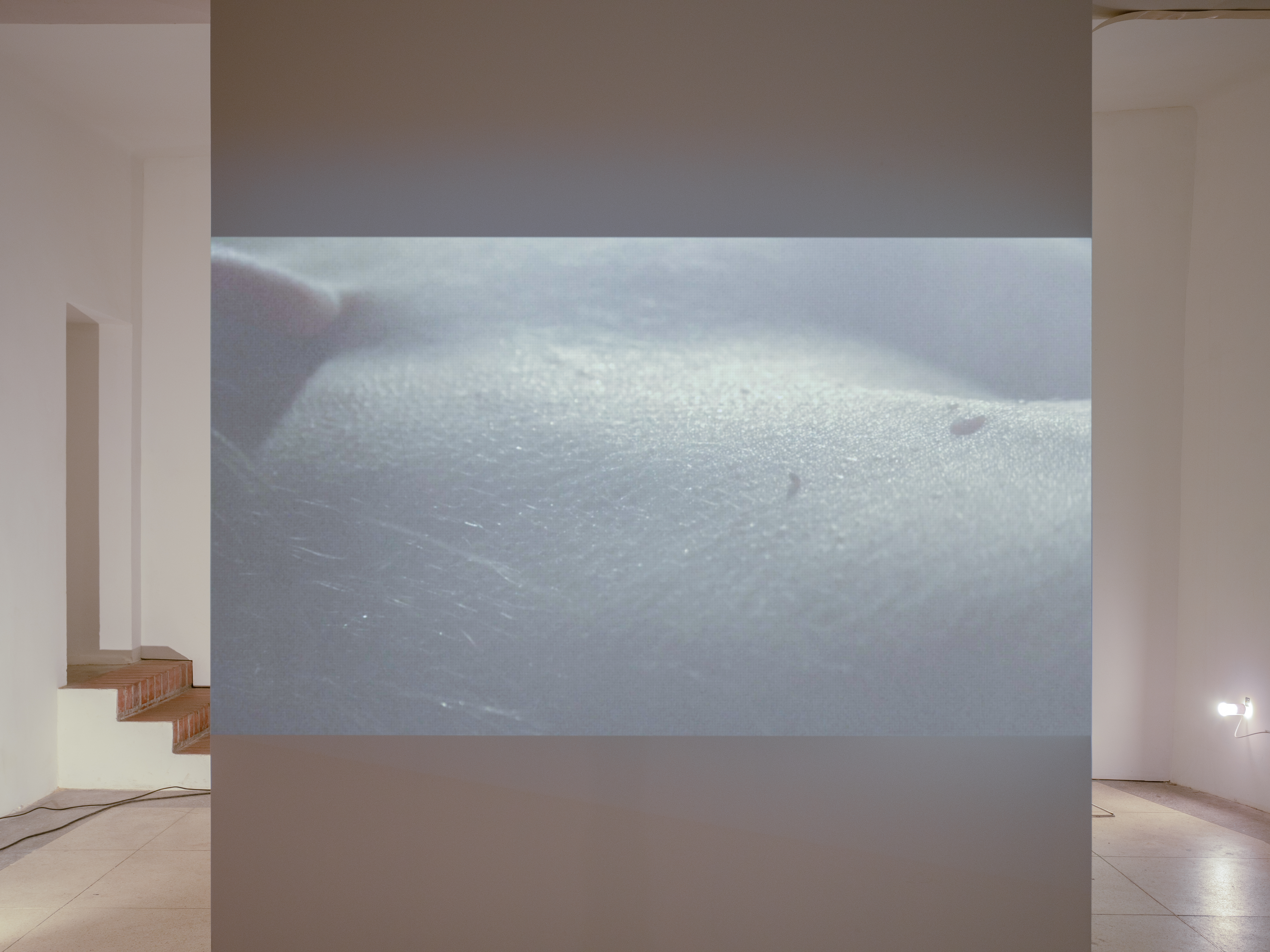
One of the lines from their text also became the title of the exhibition — Sounds Like a Silver Spoon. The sonic quality of the title is intentional, as it highlights sound as yet another layer of materiality in the exhibition. “I understand materiality in the broadest sense,” says Petrošiūtė. “It’s important for me to sense my relationship with the material, to consider the encounter between the body and matter—whether it’s glass, textiles, or even sound. Different materials also create opportunities to collaborate with artists from various fields — for example, composer Jūra Elena Šedytė created the soundtrack for my video work using a text I recorded.”
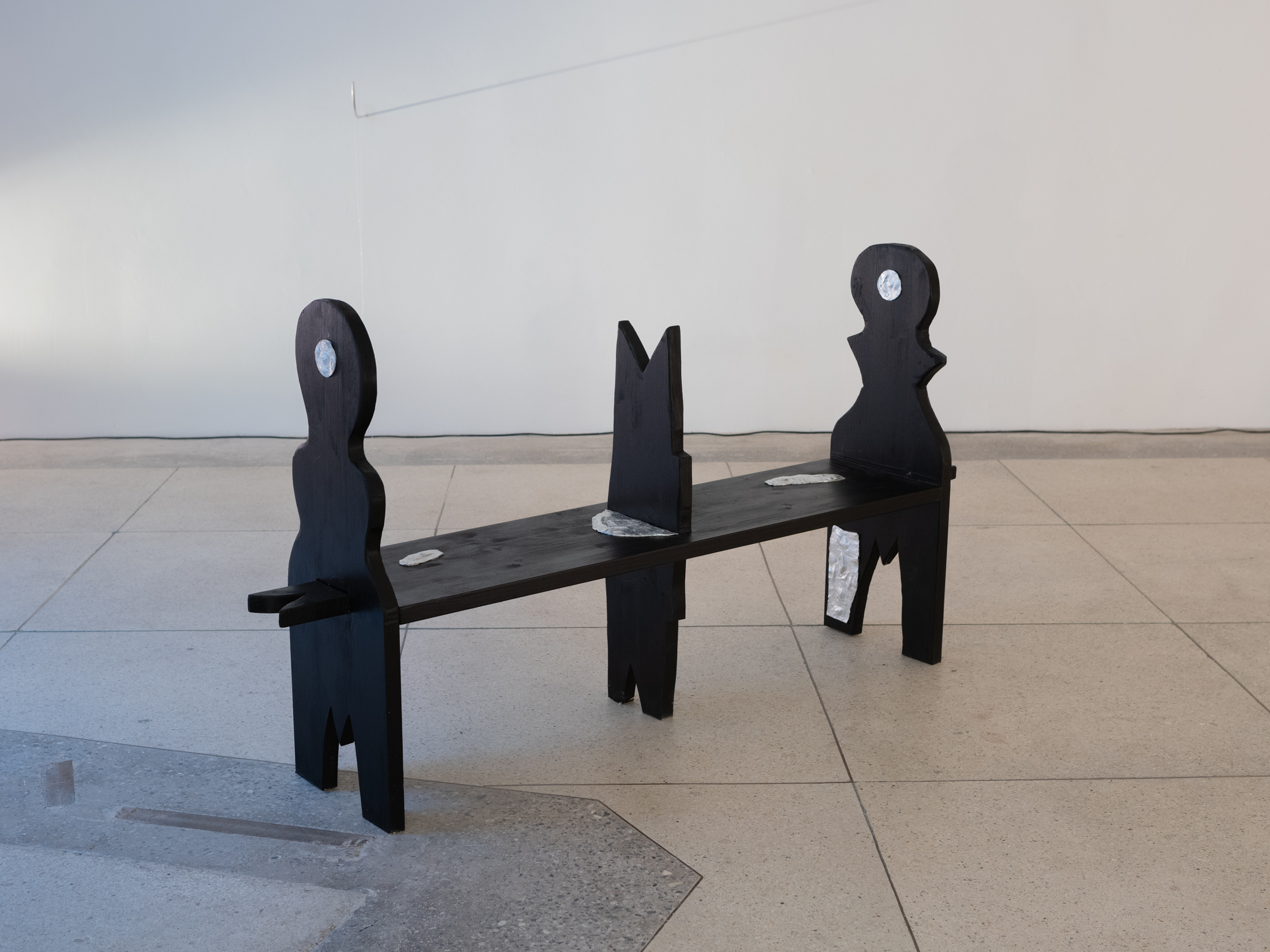
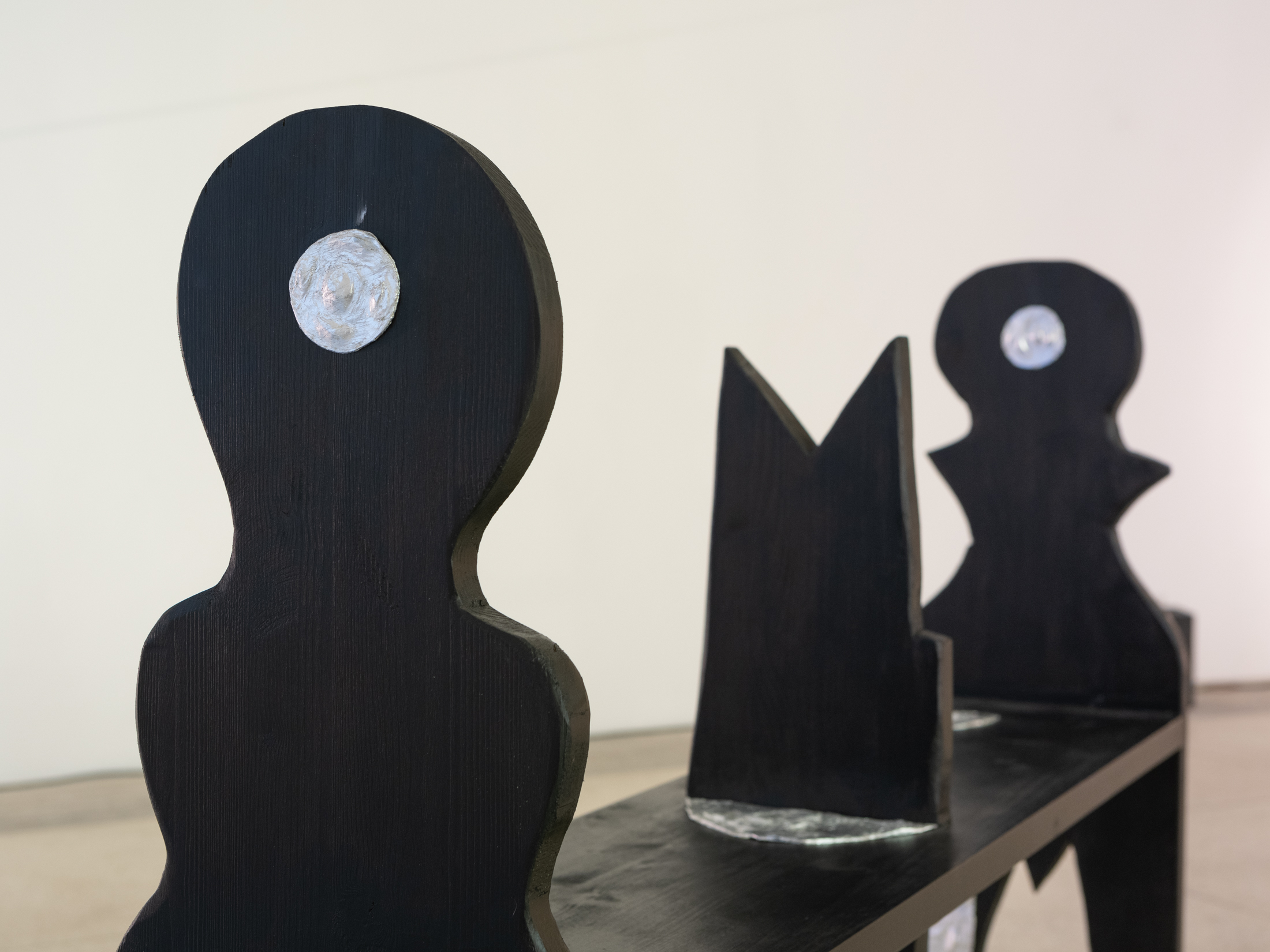
“That morning I woke up as a sensorial being. Before my eyes unfolded a magnificent garden — full of lush greenery and emanating sounds. I noticed that some of these sounds drifted from afar — from within a curve of branches — where the backs of two figures flickered. I could not hear their voices. Yet their bodies seemed alive, curled upon a small bench, forever discussing something. They were bathing in grandeur.
The figures left me a map composed of words, which turned into a poem. It not only helped me navigate the surroundings but also instructed me on how to create a home. It read:
To build a house, one must begin by listening to the materials — their forms are not accidental; they are memories from long ago, from ages before us: metal, glass, wood, and thread. The ever-changing nature of these materials forces you to look more closely, perhaps even too closely. Will you be able to avert your gaze? If not, you’ll need to employ other senses to form a complete picture. And perhaps — just perhaps — you will begin to feel not only the space itself but also what it lacks, and create with that in mind. Only then will you notice the natural rhythmic breathing of the walls. With every inhale, the microcosm shifts slightly, and the path back disappears. This house is alive; as you fill it with objects, fragments of the subconscious become lodged within its frames, giving it direction, yet never dictating the way.
Before my eyes, surrounded by the lush garden, the two figures appeared. Sitting on the bench, I heard how with each step their voices grew fainter. As much as I wished to listen to their conversation, it would have been worthless — words become deceptive if not accompanied by shared experience. Even so, these figures taught me to listen to the in-betweens, to the silence, to the materials and their quiet whisper.
Sunlight caresses you with the shimmer of silver reflections. Future generations will not know the lessons I have learned, but they will feel the gentle touch of the objects we leave behind. These abstractions, these objects, are the closest things we have inherited from our predecessors. They, like us, created things, yet left no instructions. The air they breathed has changed, and so have the times. Still, it would be naïve to think they do not guide the gestures of our hands. The figures listened and, through the poem, told what they had heard.
It turns out the figures have journeys of their own; they know that every encounter is a place to share discoveries and to rejoice in revealed wisdom.”
Eglė Petrošiūtė (b. 1991) is a Vilnius-based artist who completed her MA in Painting at the Vilnius Academy of Arts in 2016. Her artistic practice is interdisciplinary: working with video, installation, and sound, she speaks through the relationships of materialities. Her creative strategy is rooted in questions of corporeality, identity, and intimacy.
Liudvika Sonia Koort (b. 1994) is also an artist living and working in Vilnius, currently pursuing an MA in Sculpture at the Vilnius Academy of Arts. L. S. Koort began her creative path as a theater scenographer, later shifting toward an individual artistic practice. Her work explores corporeality, the experience of intuitive knowledge, and the magical dimensions of everyday life. Today, the artist works with drawing, objects, and poetry, employing a universal language of symbols, forms, and metaphors.
Exhibition curator: Eglė Agnė Benkunskytė
Architecture by Dovydas Alčauskis
Design by Vytautas Volbekas
PR by Deimantė Bulbenkaitė
Photography by Laurynas Skeisgiela
The artists and organizers would like to sincerely thank Valentinas Varnas, Aurelijus Blažinauskis, Ramutė Toliušytė, Vytautas Viržbickas, Izabelė Šuikaitė, and Alexandra Bondarev for their help and support during the preparation of the exhibition.
![]()
The exhibition is part of the Lithuanian Artists’ Association’s Strategic Program for Art Creators. The program is funded by the Lithuanian Council for Culture.
Kovo 8 d., penktadienį, 18 val. Lietuvos dailininkų sąjungos meno erdvėje „Medūza“ (Šv. Jono g. 11, Vilnius) atidaroma jaunosios kartos menininkių Eglės Petrošiūtės ir Liudvikos Sonios Koort bendra paroda „Sounds Like a Silver Spoon“. Paroda, kurios pavadinimas kilo iš abiejų menininkių parašyto poetinio teksto, veikia kaip atviras dialogas apie erdvės psichologiją bei idėją, kad mūsų formuojamos erdvės ilgainiui pradeda formuoti mus.
Pasak parodos „Sounds Like a Silver Spoon“ kuratorės Eglės Agnės Benkunskytės, nors E. Petrošiūtė ir L. S. Koort operuoja kaip atskiros kūrėjos, šis jų susitikimas pagrindinėje „Medūzos“ salėje atskleidžia bendras menininkių kūrybos gijas. „Šioje parodoje svarbus sodo kaip kosmologijų kūrimo erdvės motyvas, - pastebi parodos kuratorė, - Lietuvių mitologijoje sodas žymi ribinę erdvę, kurioje susitinka gamtos ciklai ir žmogaus kultūrinė pastanga, tad šią įtampą menininkės nagrinėja pasitelkdamos skulptūrą, tekstilę, piešinį, videomeną, garsą ir instaliacijos elementus.”
Reikšmine menininkių dialogo ašimi tampa E. Petrošiūtės ir L. S. Koort poetinis tekstas, tampantis atskiru parodos kūriniu. Vystydamos savo praktiką abi menininkės neretai rašo, tad pažymėdamos savo betarpišką pokalbį jos nusprendė sukurti tekstą, sudarytą iš anksčiau rašytų eilių. „Modifikavome savo jau turėtus tekstus ir sujungėme juos į vieną visumą, kuri atspindi mūsų bendravimą ruošiantis parodai, - teigia L. S. Koort, - mūsų kalboje natūraliai yra daug poetikos ir minčių tirštumo, tad skirtingas poemos eilutes skaitome tarsi laišką viena kitai.“
Viena iš menininkių teksto eilučių tapo ir parodos pavadinimu - „Sounds Like a Silver Spoon“ (angl. „Skamba tarsi sidabrinis šaukštelis“). Garsinė pavadinimo nuoroda parinkta neatsitiktinai, nes atskleidžia, kad garsas yra dar vienas parodos medžiagiškumo sluoksnis. „Medžiagiškumą savo kūryboje suvokiu pačia plačiausia prasme, man svarbu pajusti santykį su medžiaga, apgalvoti kūno ir medžiagos susidūrimo aspektą, nesvarbu, tai stiklas, tekstilė, ar net garsas, - pasakoja E. Petrošiūtė, - Skirtingos medžiagos taip pat sukuria galimybes bendradarbiauti su skirtingų sričių menininkais - pavyzdžiui, naudodamasi mano įrašytu tekstu kompozitorė Jūra Elena Šedytė sukūrė mano video kūrinio garso takelį.“
“Tą rytą pabudau kaip jusli būtybė. Prieš mano akis atsivėrė nuostabus sodas. Pilnas sodrios žalumos ir sklindančių garsų. Pastebėjau, jog kai kurie gardai sklido iš tolumos - lenktų šakų apsuptyje - kur šmėkščiojo dviejų figūrų nugaros. Negalėjau išgirsti jų balsų. Tačiau jų kūnai atrodė gyvybingi, susirangę ant nedidelio suoliuko, amžinai kažką aptarinėjantys. Jie maudėsi didybėje.
Figūros paliko man žemėlapį, sudarytą iš žodžių, kurie virto eilėraščiu. Jis ne tik padėjo orientuotis aplinkoje, bet ir nurodė, kaip sukurti namus. Jame buvo parašyta:
Norint pastatyti namą, reikia pradėti nuo įsiklausymo į medžiagas - jų forma nėra atsitiktinė, tai senų laikų, buvusių daugybę metų prieš mus, prisiminimas: metalas, stiklas, medis ir siūlai. Nuolat besikeičianti šių medžiagų prigimtis verčia pažvelgti atidžiau, gal net kiek per atidžiai. Ar sugebėsi atitraukti žvilgsnį? Jei ne, teks pasitelkti kitus pojūčius, kad susidarytum pilną vaizdą. Ir galbūt, tik galbūt, pradėsi jausti ne tik erdvę, bet ir tai, ko jai trūksta, ir atsižvelgiant į tai kurti. Tik tada pastebėsi natūralų ritmingą sienų kvėpavimą. Su kiekvienu įkvėpimu mikrokosmas šiek tiek pasikeičia ir kelio atgal nebelieka. Šis namas yra gyvas, pildant jį objektais dalis pasąmonės įstringa jo rėmuose, suteikiant daugiau krypties, bet niekada nediktuojant kelio.
Prieš mano akis vešlaus sodo apsuptyje pasirodė dvi figūros. Sėdint ant suoliuko girdėjau, kaip su kiekvienu žingsniu balsai tapo vis tylesni. Kad ir kaip norėjau pasiklausyti šio pokalbio, tai būtų buvę nieko verta, žodžiai tampa apgaulingais, jei jų nelydi bendra patirtis. Nepaisant to, šios figūros išmokė mane įsiklausyti į tarpus, į tylą, į medžiagas ir jų tylų šnabždesį.
Saulės spinduliai glosto tave sidabrinių atspindžių skambesiu. Ateities kartos nežinos mano išmoktų pamokų, tačiau pajus švelnų mūsų paliktų objektų prisilietimą. Šios abstrakcijos, šie objektai yra artimiausi dalykai, kuriuos mums paliko mūsų pirmtakai. Jie kaip ir mes, kūrė daiktus, tačiau nepaliko jokių instrukcijų. Oras, kuriuo jie kvėpavo, pasikeitė, pasikeitė ir laikai. Vis dėlto, būtų naivu manyti, kad jie nevedžioja mūsų rankų gestų. Figūros klausėsi ir eilėraščiu pasakojo, ką jos išgirdo.
Pasirodo, pačios figūros turi savąsias keliones, jos žino, kad kiekvienas susidūrimas yra vieta, kur galima pasidalyti atradimais ir pasidžiaugti atskleista išmintimi.” - Eglė A. Benkunskytė

Eglė Petrošiūtė ir Liudvika Sonia Koort
Sounds like a Silver Teaspoon
2024.03.08–04.06
Text in English
On Friday, March 8, at 6 p.m., the Lithuanian Artists’ Association’s art space “Medūza” (Šv. Jono St. 11, Vilnius) will open Sounds Like a Silver Spoon, a joint exhibition by the young-generation artists Eglė Petrošiūtė and Liudvika Sonia Koort. The exhibition, whose title comes from a poetic text written by both artists, functions as an open dialogue about the psychology of space and the idea that the spaces we shape eventually begin to shape us.
According to the exhibition’s curator, Eglė Agnė Benkunskytė, although Petrošiūtė and Koort work as individual creators, their meeting in Medūza’s main hall reveals shared threads in their artistic practices. “In this exhibition, the motif of the garden as a space for creating cosmologies becomes important,” the curator notes. “In Lithuanian mythology, the garden marks a liminal zone where the cycles of nature meet human cultural effort, and the artists explore this tension through sculpture, textiles, drawing, video art, sound, and installation elements.”
The central axis of the artists’ dialogue becomes the poetic text by Eglė Petrošiūtė and Liudvika Sonia Koort, which itself functions as a standalone work within the exhibition. Writing is a frequent part of both artists’ practices, so in marking their direct conversation, they decided to create a text composed of previously written lines. “We modified our earlier texts and combined them into a single whole that reflects our communication while preparing for the exhibition,” Koort explains. “There is naturally a lot of poetry and density of thought in the way we speak, so we read the different lines of the poem almost like letters to one another.”
One of the lines from their text also became the title of the exhibition — Sounds Like a Silver Spoon. The sonic quality of the title is intentional, as it highlights sound as yet another layer of materiality in the exhibition. “I understand materiality in the broadest sense,” says Petrošiūtė. “It’s important for me to sense my relationship with the material, to consider the encounter between the body and matter—whether it’s glass, textiles, or even sound. Different materials also create opportunities to collaborate with artists from various fields — for example, composer Jūra Elena Šedytė created the soundtrack for my video work using a text I recorded.”
“That morning I woke up as a sensorial being. Before my eyes unfolded a magnificent garden — full of lush greenery and emanating sounds. I noticed that some of these sounds drifted from afar — from within a curve of branches — where the backs of two figures flickered. I could not hear their voices. Yet their bodies seemed alive, curled upon a small bench, forever discussing something. They were bathing in grandeur.
The figures left me a map composed of words, which turned into a poem. It not only helped me navigate the surroundings but also instructed me on how to create a home. It read:
To build a house, one must begin by listening to the materials — their forms are not accidental; they are memories from long ago, from ages before us: metal, glass, wood, and thread. The ever-changing nature of these materials forces you to look more closely, perhaps even too closely. Will you be able to avert your gaze? If not, you’ll need to employ other senses to form a complete picture. And perhaps — just perhaps — you will begin to feel not only the space itself but also what it lacks, and create with that in mind. Only then will you notice the natural rhythmic breathing of the walls. With every inhale, the microcosm shifts slightly, and the path back disappears. This house is alive; as you fill it with objects, fragments of the subconscious become lodged within its frames, giving it direction, yet never dictating the way.
Before my eyes, surrounded by the lush garden, the two figures appeared. Sitting on the bench, I heard how with each step their voices grew fainter. As much as I wished to listen to their conversation, it would have been worthless — words become deceptive if not accompanied by shared experience. Even so, these figures taught me to listen to the in-betweens, to the silence, to the materials and their quiet whisper.
Sunlight caresses you with the shimmer of silver reflections. Future generations will not know the lessons I have learned, but they will feel the gentle touch of the objects we leave behind. These abstractions, these objects, are the closest things we have inherited from our predecessors. They, like us, created things, yet left no instructions. The air they breathed has changed, and so have the times. Still, it would be naïve to think they do not guide the gestures of our hands. The figures listened and, through the poem, told what they had heard.
It turns out the figures have journeys of their own; they know that every encounter is a place to share discoveries and to rejoice in revealed wisdom.”
— Eglė A. Benkunskytė
ARTISTS
Eglė Petrošiūtė (b. 1991) is a Vilnius-based artist who completed her MA in Painting at the Vilnius Academy of Arts in 2016. Her artistic practice is interdisciplinary: working with video, installation, and sound, she speaks through the relationships of materialities. Her creative strategy is rooted in questions of corporeality, identity, and intimacy.
Liudvika Sonia Koort (b. 1994) is also an artist living and working in Vilnius, currently pursuing an MA in Sculpture at the Vilnius Academy of Arts. L. S. Koort began her creative path as a theater scenographer, later shifting toward an individual artistic practice. Her work explores corporeality, the experience of intuitive knowledge, and the magical dimensions of everyday life. Today, the artist works with drawing, objects, and poetry, employing a universal language of symbols, forms, and metaphors.
Exhibition curator: Eglė Agnė Benkunskytė
Architecture by Dovydas Alčauskis
Design by Vytautas Volbekas
PR by Deimantė Bulbenkaitė
Photography by Laurynas Skeisgiela
ARTISTS
The artists and organizers would like to sincerely thank Valentinas Varnas, Aurelijus Blažinauskis, Ramutė Toliušytė, Vytautas Viržbickas, Izabelė Šuikaitė, and Alexandra Bondarev for their help and support during the preparation of the exhibition.

The exhibition is part of the Lithuanian Artists’ Association’s Strategic Program for Art Creators. The program is funded by the Lithuanian Council for Culture.
Tekstas lietuvių kalba
Kovo 8 d., penktadienį, 18 val. Lietuvos dailininkų sąjungos meno erdvėje „Medūza“ (Šv. Jono g. 11, Vilnius) atidaroma jaunosios kartos menininkių Eglės Petrošiūtės ir Liudvikos Sonios Koort bendra paroda „Sounds Like a Silver Spoon“. Paroda, kurios pavadinimas kilo iš abiejų menininkių parašyto poetinio teksto, veikia kaip atviras dialogas apie erdvės psichologiją bei idėją, kad mūsų formuojamos erdvės ilgainiui pradeda formuoti mus.
Pasak parodos „Sounds Like a Silver Spoon“ kuratorės Eglės Agnės Benkunskytės, nors E. Petrošiūtė ir L. S. Koort operuoja kaip atskiros kūrėjos, šis jų susitikimas pagrindinėje „Medūzos“ salėje atskleidžia bendras menininkių kūrybos gijas. „Šioje parodoje svarbus sodo kaip kosmologijų kūrimo erdvės motyvas, - pastebi parodos kuratorė, - Lietuvių mitologijoje sodas žymi ribinę erdvę, kurioje susitinka gamtos ciklai ir žmogaus kultūrinė pastanga, tad šią įtampą menininkės nagrinėja pasitelkdamos skulptūrą, tekstilę, piešinį, videomeną, garsą ir instaliacijos elementus.”
Reikšmine menininkių dialogo ašimi tampa E. Petrošiūtės ir L. S. Koort poetinis tekstas, tampantis atskiru parodos kūriniu. Vystydamos savo praktiką abi menininkės neretai rašo, tad pažymėdamos savo betarpišką pokalbį jos nusprendė sukurti tekstą, sudarytą iš anksčiau rašytų eilių. „Modifikavome savo jau turėtus tekstus ir sujungėme juos į vieną visumą, kuri atspindi mūsų bendravimą ruošiantis parodai, - teigia L. S. Koort, - mūsų kalboje natūraliai yra daug poetikos ir minčių tirštumo, tad skirtingas poemos eilutes skaitome tarsi laišką viena kitai.“
Viena iš menininkių teksto eilučių tapo ir parodos pavadinimu - „Sounds Like a Silver Spoon“ (angl. „Skamba tarsi sidabrinis šaukštelis“). Garsinė pavadinimo nuoroda parinkta neatsitiktinai, nes atskleidžia, kad garsas yra dar vienas parodos medžiagiškumo sluoksnis. „Medžiagiškumą savo kūryboje suvokiu pačia plačiausia prasme, man svarbu pajusti santykį su medžiaga, apgalvoti kūno ir medžiagos susidūrimo aspektą, nesvarbu, tai stiklas, tekstilė, ar net garsas, - pasakoja E. Petrošiūtė, - Skirtingos medžiagos taip pat sukuria galimybes bendradarbiauti su skirtingų sričių menininkais - pavyzdžiui, naudodamasi mano įrašytu tekstu kompozitorė Jūra Elena Šedytė sukūrė mano video kūrinio garso takelį.“
“Tą rytą pabudau kaip jusli būtybė. Prieš mano akis atsivėrė nuostabus sodas. Pilnas sodrios žalumos ir sklindančių garsų. Pastebėjau, jog kai kurie gardai sklido iš tolumos - lenktų šakų apsuptyje - kur šmėkščiojo dviejų figūrų nugaros. Negalėjau išgirsti jų balsų. Tačiau jų kūnai atrodė gyvybingi, susirangę ant nedidelio suoliuko, amžinai kažką aptarinėjantys. Jie maudėsi didybėje.
Figūros paliko man žemėlapį, sudarytą iš žodžių, kurie virto eilėraščiu. Jis ne tik padėjo orientuotis aplinkoje, bet ir nurodė, kaip sukurti namus. Jame buvo parašyta:
Norint pastatyti namą, reikia pradėti nuo įsiklausymo į medžiagas - jų forma nėra atsitiktinė, tai senų laikų, buvusių daugybę metų prieš mus, prisiminimas: metalas, stiklas, medis ir siūlai. Nuolat besikeičianti šių medžiagų prigimtis verčia pažvelgti atidžiau, gal net kiek per atidžiai. Ar sugebėsi atitraukti žvilgsnį? Jei ne, teks pasitelkti kitus pojūčius, kad susidarytum pilną vaizdą. Ir galbūt, tik galbūt, pradėsi jausti ne tik erdvę, bet ir tai, ko jai trūksta, ir atsižvelgiant į tai kurti. Tik tada pastebėsi natūralų ritmingą sienų kvėpavimą. Su kiekvienu įkvėpimu mikrokosmas šiek tiek pasikeičia ir kelio atgal nebelieka. Šis namas yra gyvas, pildant jį objektais dalis pasąmonės įstringa jo rėmuose, suteikiant daugiau krypties, bet niekada nediktuojant kelio.
Prieš mano akis vešlaus sodo apsuptyje pasirodė dvi figūros. Sėdint ant suoliuko girdėjau, kaip su kiekvienu žingsniu balsai tapo vis tylesni. Kad ir kaip norėjau pasiklausyti šio pokalbio, tai būtų buvę nieko verta, žodžiai tampa apgaulingais, jei jų nelydi bendra patirtis. Nepaisant to, šios figūros išmokė mane įsiklausyti į tarpus, į tylą, į medžiagas ir jų tylų šnabždesį.
Saulės spinduliai glosto tave sidabrinių atspindžių skambesiu. Ateities kartos nežinos mano išmoktų pamokų, tačiau pajus švelnų mūsų paliktų objektų prisilietimą. Šios abstrakcijos, šie objektai yra artimiausi dalykai, kuriuos mums paliko mūsų pirmtakai. Jie kaip ir mes, kūrė daiktus, tačiau nepaliko jokių instrukcijų. Oras, kuriuo jie kvėpavo, pasikeitė, pasikeitė ir laikai. Vis dėlto, būtų naivu manyti, kad jie nevedžioja mūsų rankų gestų. Figūros klausėsi ir eilėraščiu pasakojo, ką jos išgirdo.
Pasirodo, pačios figūros turi savąsias keliones, jos žino, kad kiekvienas susidūrimas yra vieta, kur galima pasidalyti atradimais ir pasidžiaugti atskleista išmintimi.” - Eglė A. Benkunskytė
MENININKĖS
Eglė Petrošiūtė (g. 1991 m.) – Vilniuje gyvenanti ir kurianti menininkė, 2016 m. baigusi tapybos magistro studijas Vilniaus dailės akademijoje. Jos meninė praktika tarpdisciplininė: pasitelkdama videomeną, instaliaciją ir garsą menininkė kalba per medžiagiškumų ryšius. Jos kūrybinė strategija paremta kūniškumo, tapatybės ir intymumo sampratos problema.
Liudvika Sonia Koort (g. 1994 m.) – taip pat Vilniuje gyvenanti ir dirbanti menininkė, šiuo metu studijuojanti Vilniaus dailės akademijoje skulptūros magistro programoje. Savo kūrybinį kelią L. S. Koort pradėjo kaip teatro scenografė, vėliau perėjo prie individualios meninės praktikos ir savo kūryboje tyrinėja kūniškumą, intuityvaus žinojimo patyrimą, bei magišką žmogaus kasdienybę. Šiandien menininkė renkasi piešinio, objekto, poezijos medijas ir universalią simbolių, formų ir metaforų kalbą.
Parodos kuratorė: Eglė Agnė Benkunskytė
Architektūra: Dovydas Alčauskis
Dizainas: Vytautas Volbekas
Sklaida: Deimantė Bulbenkaitė
Nuotraukos: Laurynas Skeisgiela
PADĖKOS
Menininkės ir organizatoriai norėtų nuoširdžiai padėkoti už pagalbą ir palaikymą parodos pasirengimo metu Valentinui Varnui, Aurelijui Blažinauskiui, Ramutei Toliušytei, Vytautui Viržbickui, Izabelei Šuikaitei ir Alexandrai Bondarev.
Paroda yra Lietuvos dailinininkų sąjungos strateginės meno kūrėjų organizacijos programos dalis, programą finansuoja Lietuvos kultūros taryba.
INSTALLATION VIEWS / EKSPOZICIJOS VAIZDAI

︎︎︎ Atgal